June 25, 2026
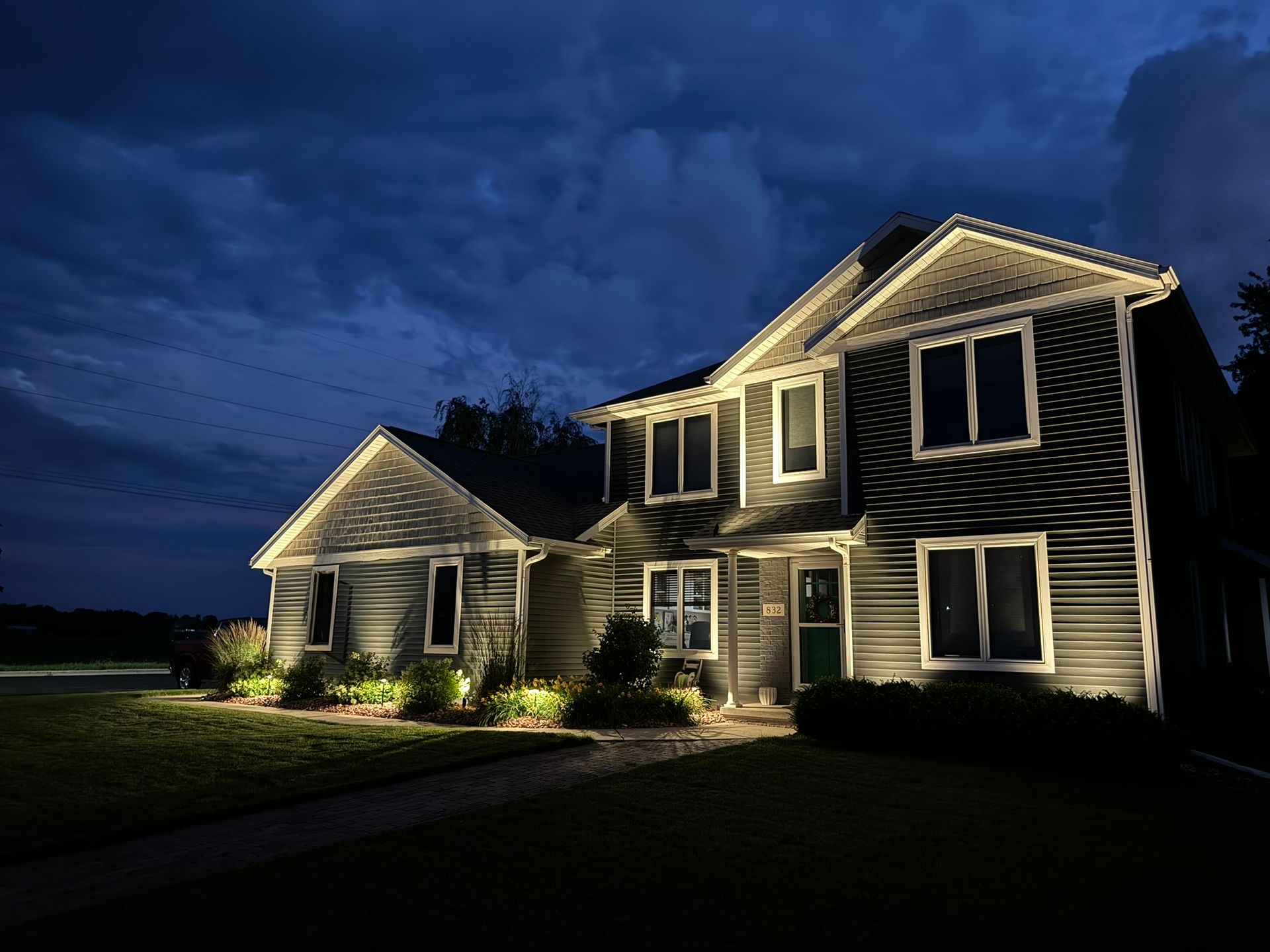
When the sun sets, your beautifully curated yard doesn't have to disappear into the shadows. A thoughtfully designed outdoor space extends the footprint of your home, creating a magical sanctuary that you can enjoy long after dusk. Over the past few years, homeowners have increasingly recognized the immense value of illuminating their home exteriors. According to the National Association of Landscape Professionals, outdoor lighting ranked in 2025's top three projects. This surge in popularity is no surprise to us at Lang Lighting and Decor, LLC. We know firsthand that the right landscape lighting design can completely transform a property, turning a dark yard into a captivating nocturnal retreat.
Whether you want to showcase a centuries-old oak tree, illuminate a winding pathway through your vibrant flower beds, or create a cozy atmosphere for evening entertaining, the strategic placement of fixtures is key. You don't want your yard to look like a brightly lit stadium, nor do you want it so dim that navigating the space becomes difficult or hazardous. It is all about balance, contrast, and understanding how illumination interacts with the natural elements of your garden.
To help you envision the endless possibilities for your own property, we have compiled a guide to illuminating your flora and outdoor features. Here are our top seven expert techniques for highlighting your trees, shrubs, and gardens effectively.
1. Uplighting Majestic Trees
Uplighting is perhaps the most classic and widely used technique in any premium landscape lighting scheme. As the name suggests, this method involves placing a directional fixture on the ground and aiming the beam upward to illuminate the trunk and canopy of a tree. This approach highlights the majestic structure of large trees, such as oaks, maples, or weeping willows, drawing the eye upward and emphasizing the impressive height and scale of your property.
When utilizing this technique, the positioning of the fixture and the angle of the beam are absolutely critical. Placing the light too close to the trunk might create a harsh hotspot, while placing it too far away can cause the light to wash out before it reaches the upper branches. For trees with dense canopies, positioning the fixture slightly outside the drip line and angling it inward often yields the best results. For trees with interesting bark textures, placing a well light close to the base and grazing the trunk can produce a highly textured effect that looks spectacular against the dark night sky.
2. Moonlighting for Natural Ambiance
If you desire a softer, more romantic glow that mimics the natural light of a full moon, moonlighting is the ideal technique. Unlike uplighting, which pushes light from the ground up, moonlighting involves securely mounting a fixture high up within the branches of a large tree and aiming the light downward. As the light filters through the leaves and branches, it casts beautiful, dappled shadows on the ground below.
This technique is exceptionally effective over patios, garden pathways, and seating areas where you want to create a relaxed, inviting atmosphere. The soft illumination provides functional visibility without the harshness of direct spotlights. Furthermore, because the light source is hidden high in the canopy, the overall effect feels incredibly organic and natural. At Lang Lighting and Decor, LLC, we highly recommend utilizing this approach when you want to achieve a seamless blend of natural beauty and subtle security. Achieving the perfect moonlighting effect requires careful installation to protect the tree, but the breathtaking result is well worth the effort.
3. Silhouetting to Create Drama
When you want to add a touch of theatrical flair to your yard, silhouetting is a magnificent choice. This technique is used to highlight the intricate shape or distinct outline of a plant, tree, or garden structure by placing a light behind it and aiming the beam at an adjacent wall or fence. The illuminated background causes the object in the foreground to appear as a dark, striking silhouette.
Silhouetting works best with plants that have unique, architectural shapes, such as Japanese maples, ornamental grasses, agave, or topiary bushes. By washing the wall behind the plant with light, you draw attention to the striking geometry of the flora rather than its color or surface texture. It is a fantastic way to add depth to the perimeter of your yard and make boundary walls feel far less confining. A well-executed silhouette creates a prominent focal point that instantly elevates the overall sophistication of your landscape lighting design, turning ordinary garden beds into dynamic pieces of modern art.
4. Path Lighting Through Garden Beds
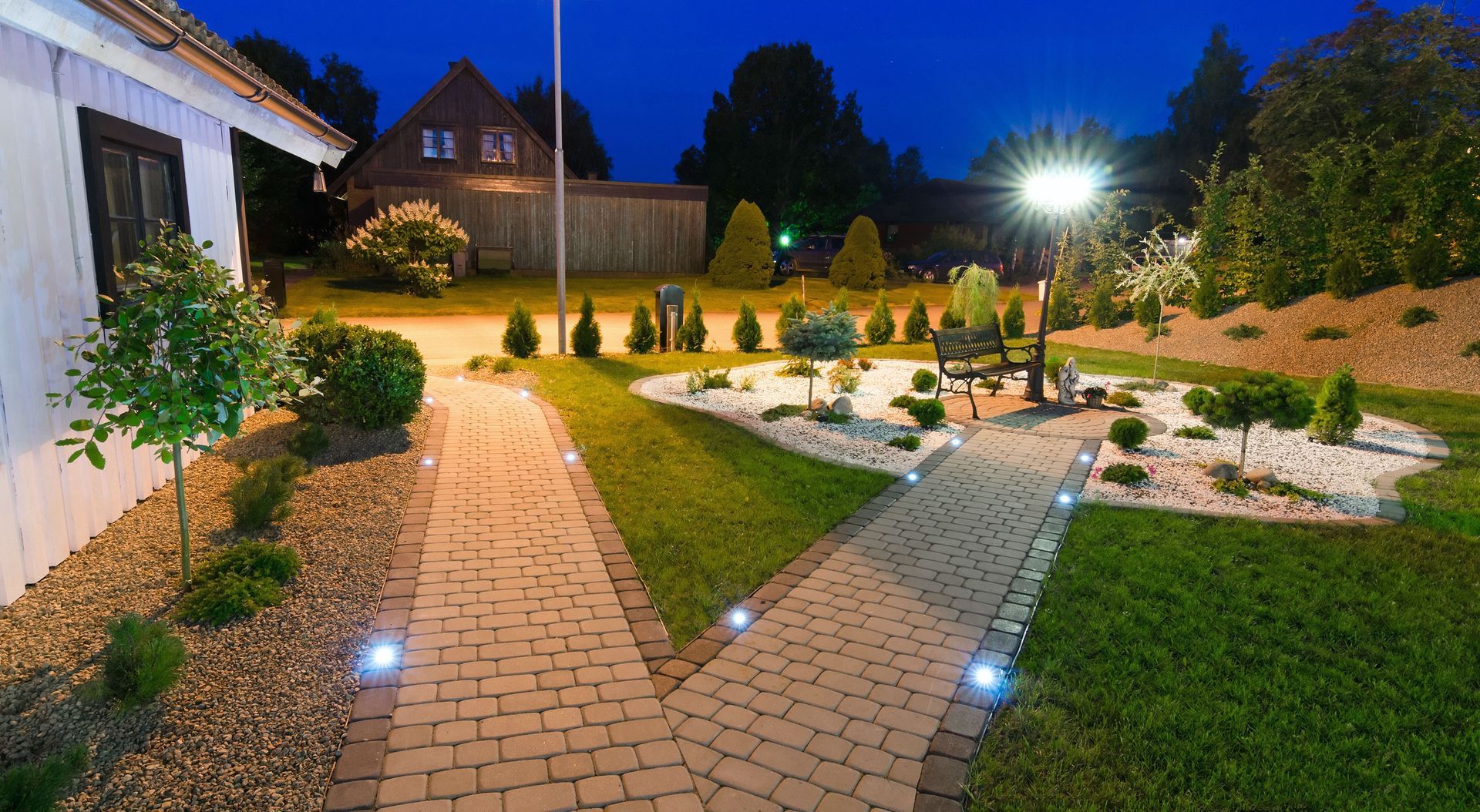
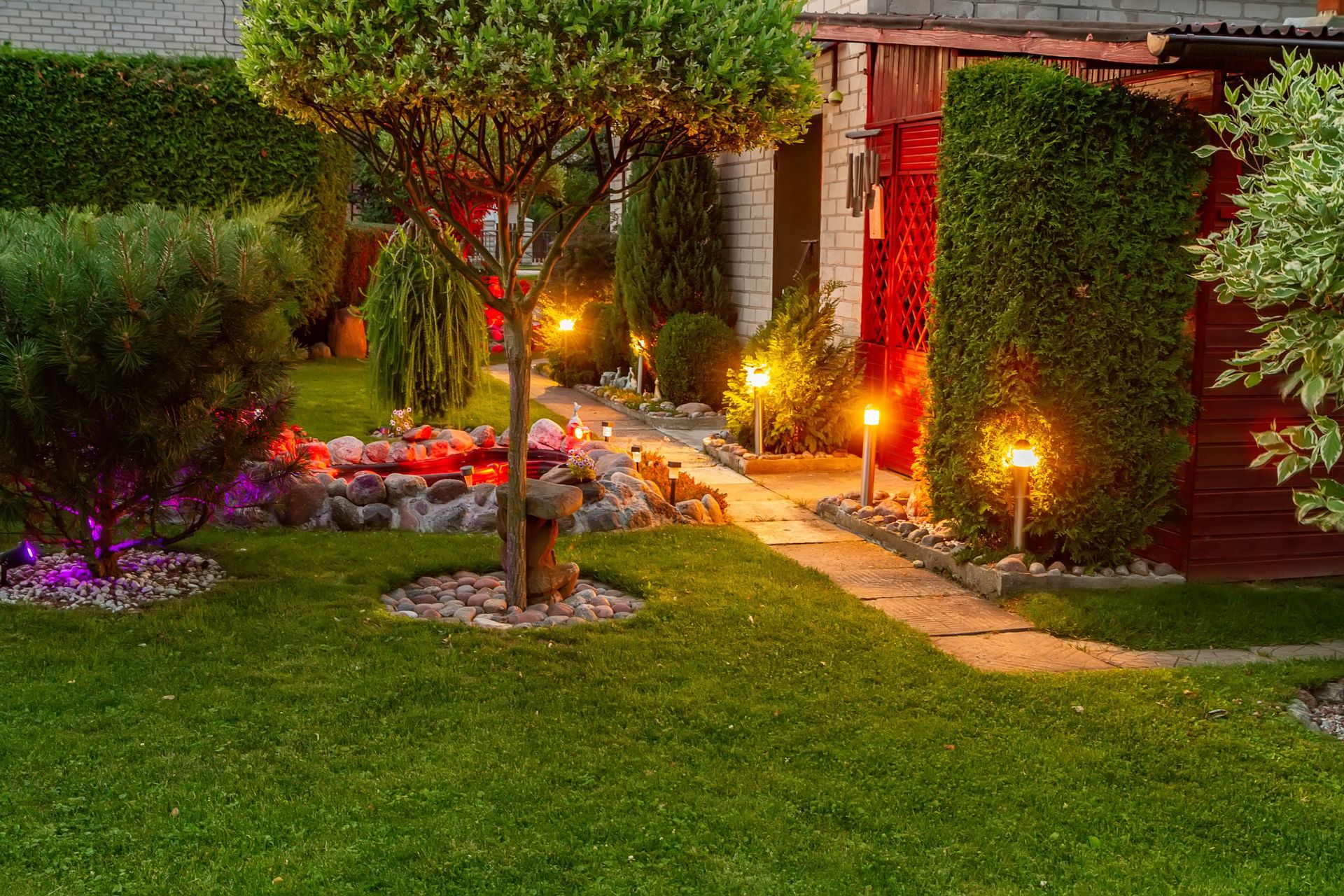
While safety is the primary reason most homeowners install path lights, these low-voltage fixtures offer incredible aesthetic benefits when woven thoughtfully through your garden beds. Path lights do not merely guide your footsteps; they serve as a gentle visual anchor that connects different zones of your outdoor space.
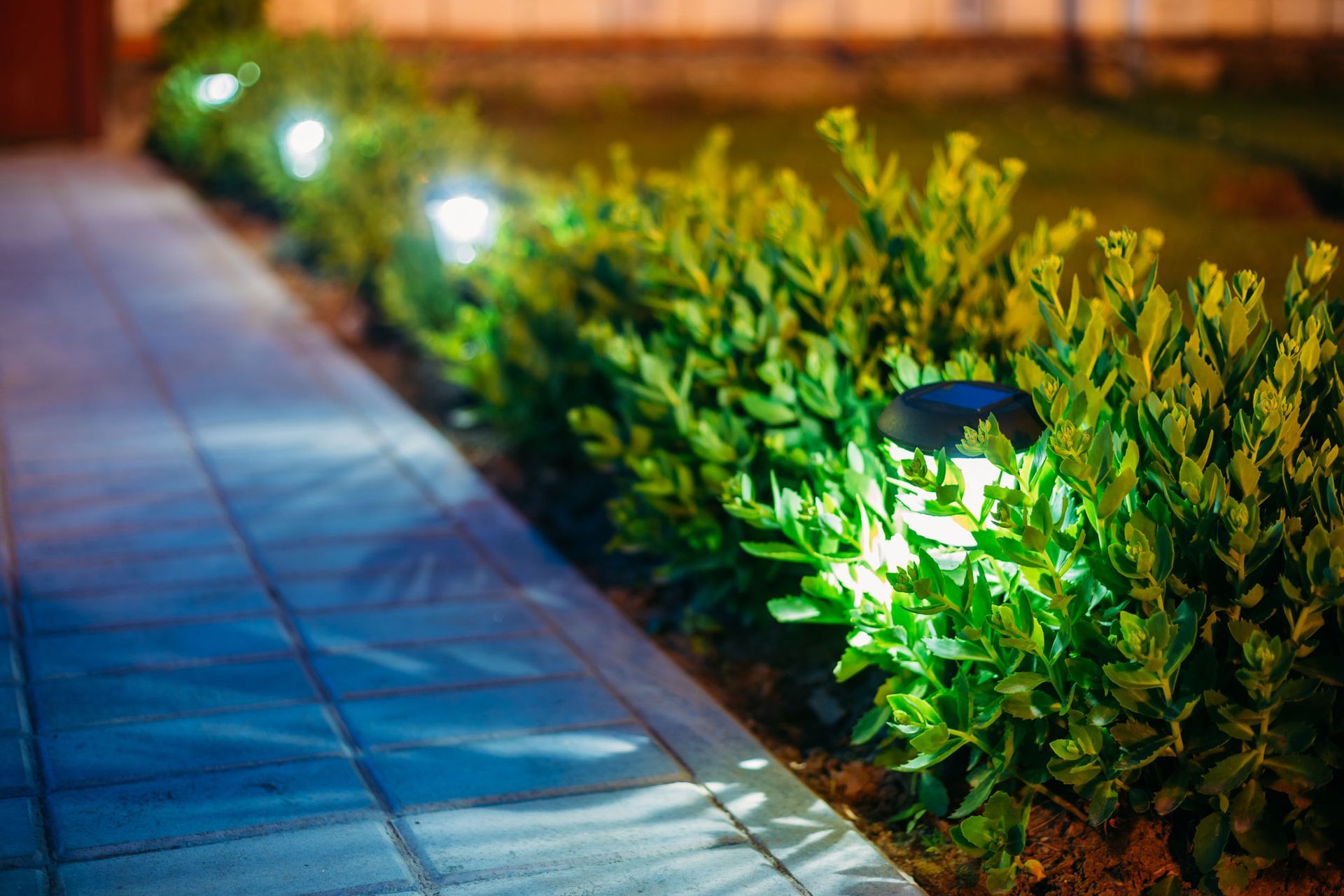
When illuminating a walkway that borders a garden, resist the urge to line up the fixtures in a perfectly straight, airport-runway configuration. Instead, stagger the lights on alternating sides of the path, or nestle them slightly inside the garden bed itself. This approach allows the pool of light to spill softly over the edges of your blooming flowers and low-lying ground cover, integrating the hardscape with the softscape. Choosing fixtures with a wide, downward-facing beam spread ensures the light stays exactly where it is needed without causing uncomfortable glare. With the right fixtures, this becomes an integral layer of your overall landscape lighting strategy.
5. Wash Lighting for Shrubbery and Hedges
Not every element in your yard requires a dramatic, high-intensity spotlight. In fact, using too many narrow-beam fixtures can make your yard look disjointed, chaotic, and visually overwhelming. For large garden beds, continuous hedges, or expansive shrubbery, wash lighting provides the perfect solution. This technique uses a wide-angle floodlight to deliver a soft, even glow across a very broad area.
Wash lighting acts as the essential ambient base layer of a professional landscape lighting installation. By gently illuminating the "negative space" between your more dramatically lit focal points, wash lighting ties the entire design together. It ensures that the transition between a brilliantly lit oak tree and the darker corners of the yard is smooth and pleasing to the eye. When illuminating a long row of boxwoods or a colorful perennial border, placing soft wash lights at regular intervals creates a cohesive, welcoming boundary that defines the edge of your property while showcasing the lush greenery.
6. Shadowing to Accentuate Texture
Shadowing is the stylistic cousin of silhouetting, but it produces a completely different visual effect. Instead of placing the light behind the plant to create a dark outline, shadowing involves placing the fixture directly in front of the plant and aiming the light through it. This projects the plant’s larger-than-life shadow onto a wall or flat surface situated directly behind it.
This technique is incredibly dynamic because as the wind blows through the leaves and branches, the enlarged shadow on the wall moves and dances, bringing the entire outdoor space to life. Shadowing is particularly effective when used with delicate, wispy plants like ferns, bamboo, or ornamental grasses, as their fine textures create intricate, mesmerizing patterns. By intentionally using the interplay of light and dark, a professional landscape lighting expert can transform a blank, boring exterior wall into a captivating canvas of moving, natural art.
At Lang Lighting and Decor, LLC, we believe that your yard should be celebrated in its entirety, day or night. Investing in a high-quality, professionally designed landscape lighting system is not just about extending your evening hours; it is about completely reimagining the beauty, safety, and functionality of your property. Contact us today to learn more about our solutions.